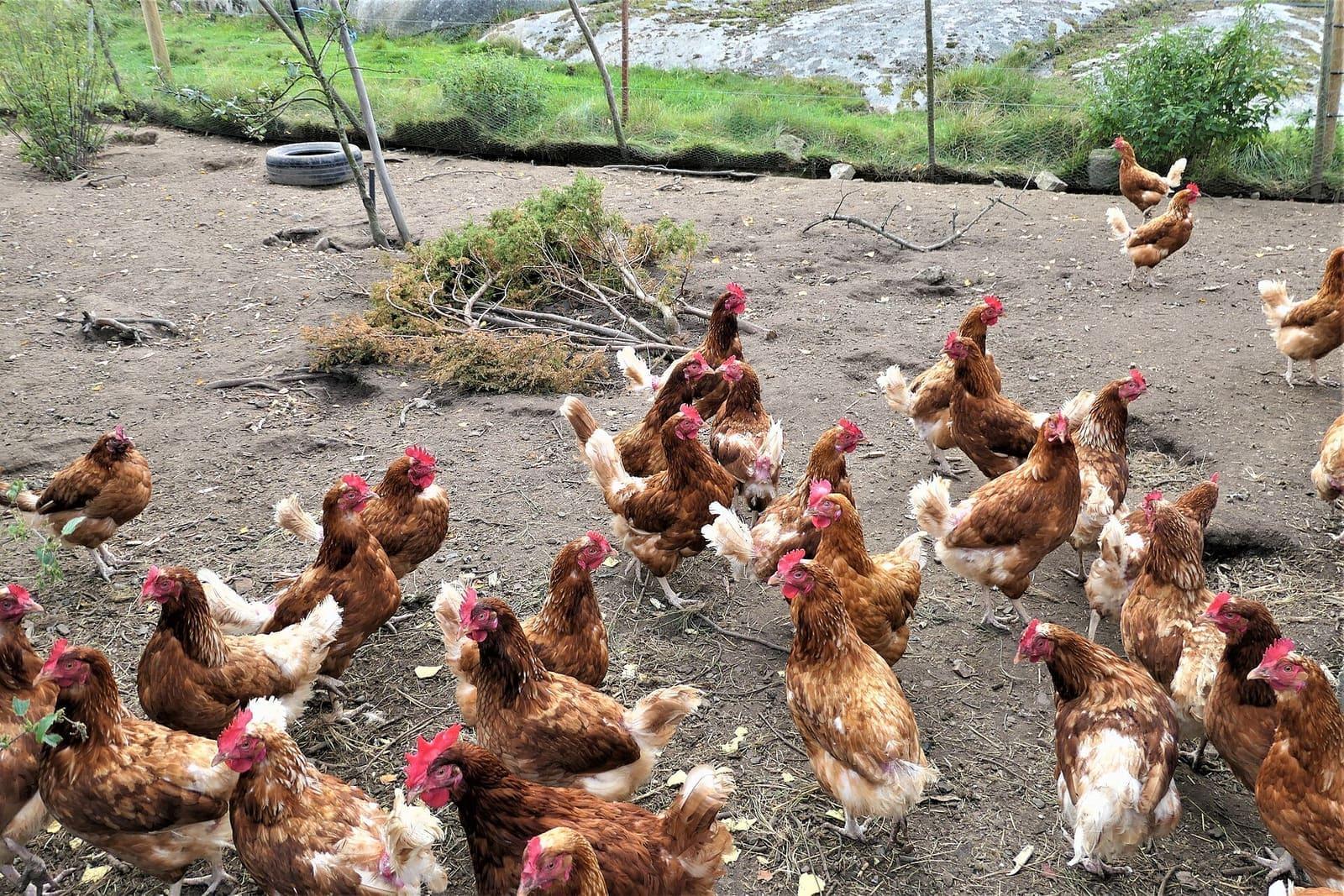
Poultry disease rarely appears from nowhere. It is carried in — on footwear, on vehicle tyres, on borrowed crates, in new birds added to an established flock, and on people who visited another farm that morning. Biosecurity is the set of habits that interrupt those routes.
Control the entrance
One controlled entry point to the poultry area does more than any other single measure. Dedicated farm footwear that never leaves the site, a functioning footbath with solution that is actually changed, and a rule that visitors do not walk into the houses will block a large share of what would otherwise arrive.
Keep age groups apart
- Do not mix new birds straight into an existing flock — isolate them first and watch them.
- Where possible, keep age groups in separate houses and work from youngest to oldest during daily rounds.
- Clean and rest a house between batches rather than restocking immediately.
Vaccination is the other half
Biosecurity reduces exposure; vaccination reduces the consequence of the exposure you fail to prevent. A vaccination programme should be built for the species, the age groups on site and the disease pressure in the area — and then followed on schedule, because a partially completed programme protects unevenly.
Watch the numbers, not just the birds
Daily mortality, feed intake and water intake are the earliest signals available, and all three usually move before the flock looks visibly unwell. A farm that records them notices a problem days before a farm that does not.